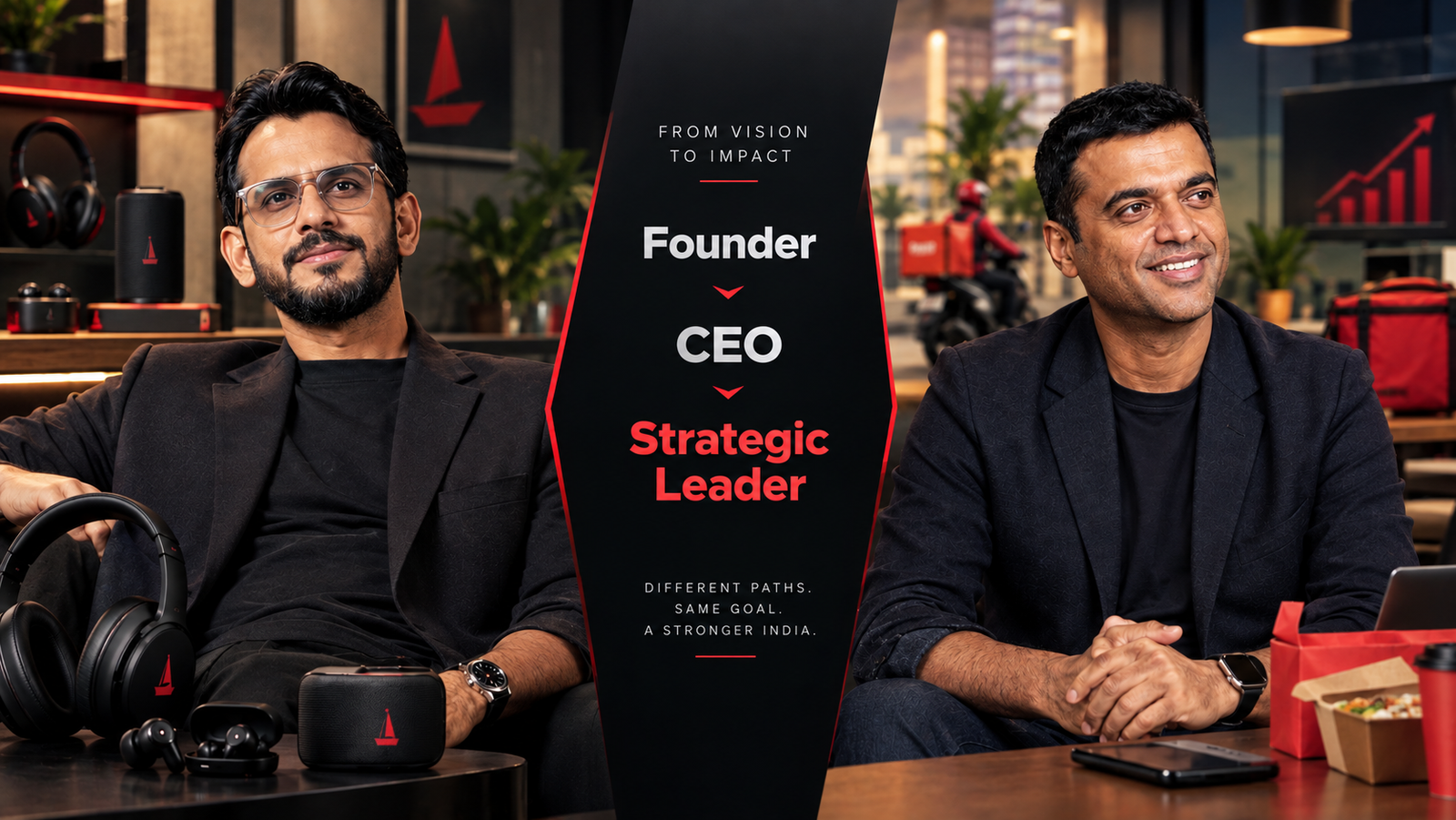
भारत के startup ecosystem में एक दिलचस्प बदलाव देखने को मिल रहा है। जिन founders ने अपनी कंपनियों को शुरुआती दौर से खड़ा किया, वही founders अब day-to-day operations से पीछे हटकर अलग तरह की भूमिकाएं अपना रहे हैं। हाल के महीनों में boAt और Eternal (Zomato की parent company) में हुए leadership changes ने इस चर्चा को और तेज किया है। लेकिन इसे सिर्फ founders के “CEO पद छोड़ने” की खबर के तौर पर देखना अधूरा होगा। असली सवाल यह है कि जब startup एक बड़े business में बदलता है, तो founder की भूमिका कैसे बदलती है?
boAt में क्या बदला?
September 2025 में boAt ने Gaurav Nayyar को CEO नियुक्त किया। इससे पहले वह कंपनी में COO की भूमिका निभा रहे थे। Co-founder Sameer Mehta ने CEO की भूमिका छोड़कर Executive Director का पद संभाला, जबकि Aman Gupta operating role से हटकर board-level strategic role में चले गए।यानी founders ने company छोड़ने का फैसला नहीं किया। बदलाव यह था कि रोजमर्रा के operations की जिम्मेदारी professional leadership team को दी गई। आज boAt की official leadership listing में Gaurav Nayyar CEO, Sameer Mehta Executive Director और Aman Gupta Whole Time Director & CMO के रूप में listed हैं। यह बदलाव ऐसे समय में आया जब boAt अपने अगले growth phase और public-market ambitions की दिशा में आगे बढ़ रहा था।
“हमने consumer mindset बदलने की कोशिश की है। हम अपने products को सिर्फ electronics के तौर पर नहीं बेचते, बल्कि lifestyle accessories के रूप में position करते हैं।”
— Aman Gupta, Co-founder, boAt
Deepinder Goyal और Eternal का बड़ा बदलाव
Zomato के founder Deepinder Goyal ने भी 2026 में अपनी operating role बदली। Eternal ने January 2026 में घोषणा की कि Goyal 1 February 2026 से Managing Director और CEO के पद से हटेंगे। उनकी जगह Blinkit के CEO Albinder Dhindsa ने Eternal के Group CEO की जिम्मेदारी संभाली। Goyal कंपनी के Vice Chairman और Non-Executive Director बने रहे। यह बदलाव इसलिए भी महत्वपूर्ण है क्योंकि Zomato अब सिर्फ food-delivery company नहीं है। Zomato के साथ Blinkit, District और Hyperpure जैसे businesses को एक larger platform के रूप में Eternal के तहत operate किया जा रहा है। Eternal की current governance information भी Deepinder Goyal को Vice Chairman & Non-Executive Director के रूप में दिखाती है।
“एक कंपनी के कई founding moments हो सकते हैं, और मुझे उम्मीद है कि यह बदलाव हमारी future journey में ऐसा ही एक और founding moment होगा।”
— Deepinder Goyal, Founder, Eternal
लेकिन Founder 2.0 आखिर है क्या?
Startup के शुरुआती दिनों में founder को लगभग हर चीज खुद देखनी पड़ती है—product, customers, hiring, marketing, fundraising और operations. लेकिन जैसे-जैसे company बड़ी होती है, वही model हमेशा practical नहीं रहता। एक point पर founder की सबसे बड़ी responsibility हर छोटी decision लेना नहीं, बल्कि यह तय करना हो सकती है कि company अगले 5–10 साल में किस दिशा में जाएगी। यहीं से Founder 2.0 का concept समझ आता है।
Founder का role:
Builder → Operator → Strategist हो सकता है। मतलब founder company से बाहर नहीं जाता। उसकी भूमिका बदल जाती है।
क्या इसका मतलब founders की importance कम हो गई?
जरूरी नहीं। boAt में founders अभी भी strategic और board-level roles में जुड़े हुए हैं। Eternal में भी Deepinder Goyal company के साथ Vice Chairman के रूप में जुड़े हुए हैं। असल बदलाव decision-making की structure में है। एक growing company में professional leadership का काम day-to-day execution, operations और organisational scale संभालना हो सकता है, जबकि founder long-term strategy, culture, new opportunities और larger bets पर focus कर सकता है।
Deepinder Goyal का अगला chapter भी इसी बदलाव को दिखाता है
Goyal ने Eternal से पूरी तरह दूरी नहीं बनाई। उनकी current role strategic और governance-oriented है। साथ ही, 2026 में उन्होंने एक नए venture, Temple, की दिशा में काम शुरू किया—जिसे reporting में brain-computer interface technology से जुड़ा venture बताया गया है। इसी तरह Aman Gupta ने boAt में non-executive role में जाने के बाद March 2026 में अपने नए venture OffBeat Studios की घोषणा की। यानी founder का एक company में operational role कम होना जरूरी नहीं कि entrepreneurship का अंत हो। कई बार यह अगले experiment की शुरुआत भी हो सकता है।
Young entrepreneurs के लिए सबसे बड़ी सीख क्या है?
1. Founder को हमेशा हर काम खुद नहीं करना चाहिए
Startup शुरू करते समय founder का हर जगह होना जरूरी हो सकता है। लेकिन scale आने के बाद वही habit bottleneck बन सकती है। एक बड़ा business eventually ऐसे लोगों की जरूरत रखता है जो founder के बिना भी decisions और operations संभाल सकें।
2. Company बड़ी होने पर founder की job भी बदलती है
₹1 crore की company और ₹1,000 crore की company को चलाने का तरीका एक जैसा नहीं हो सकता। शुरुआत में founder execution-heavy होता है। बाद में उसे systems, people, strategy और capital allocation पर ज्यादा focus करना पड़ सकता है।
3. Professional management founder की जगह लेने के बजाय company को scale कर सकता है
boAt में Gaurav Nayyar जैसे professional operator को CEO role देना इसी transition का उदाहरण है। वह पहले company के COO थे और फिर CEO बने। इसका मतलब यह नहीं कि founder की vision खत्म हो गई। बल्कि operating responsibility एक अलग leadership layer को दी गई।
4. Founder की identity और company की identity अलग होनी चाहिए
Deepinder Goyal ने 2025 में Eternal के बारे में लिखते हुए कहा था कि उनका एक लक्ष्य ऐसी organization बनाना रहा है जो अपने current leaders से आगे भी टिक सके। यही शायद किसी founder के लिए सबसे कठिन transition है:
ऐसी company बनाना जो आपके बिना भी चल सके।
5. अगला बड़ा idea भी उसी founder से आ सकता है
Entrepreneurship का मतलब सिर्फ एक company को हमेशा चलाते रहना नहीं है। कभी founder company को scale करने के लिए leadership handover करता है और खुद नए problems, products या ventures पर काम करता है। Aman Gupta और Deepinder Goyal के recent moves इसी broader entrepreneurial cycle को देखने का एक उदाहरण देते हैं।
Founder से आगे: Indian startups का बदलता phase
भारत का startup ecosystem अब उस stage पर पहुंच चुका है जहां कई companies founder-led startups से आगे बढ़कर professionally managed businesses बन रही हैं। boAt और Eternal के leadership changes को इसी broader transition के context में देखा जा सकता है। यह जरूरी नहीं कि हर founder को CEO पद छोड़ देना चाहिए। लेकिन एक successful founder के लिए एक point पर यह सवाल जरूर आता है:
“क्या मैं company चला रहा हूं, या मैंने ऐसी company बनाई है जो मेरे बिना भी आगे बढ़ सकती है?”
शायद यही Founder 2.0 की असली पहचान है।
Bizzup Take
Startup शुरू करना मुश्किल है। लेकिन उससे भी बड़ी चुनौती है ऐसी organization बनाना जो founder की personality से आगे निकलकर एक institution बन सके। Aman Gupta, Sameer Mehta और Deepinder Goyal के recent role transitions इस बात की याद दिलाते हैं कि entrepreneurship में अगला chapter हमेशा उसी chair पर बैठकर नहीं लिखा जाता। कभी-कभी founder का अगला बड़ा move वही होता है—अपनी chair किसी और को देकर खुद अगली problem solve करने निकल जाना।